Remember English words from YouTube: move from recognising to using phrases
Know a phrase when you see it but cannot use it when speaking? Practise recalling figure out from a situation, fill in a sentence and transfer it to a new context.

You meet figure out in a YouTube video, check its meaning and save it. Tomorrow, when you want to explain that you need to learn how to use a machine, you reach for the dictionary again. Recognising an expression and recalling it to express an idea are different things you can practise.
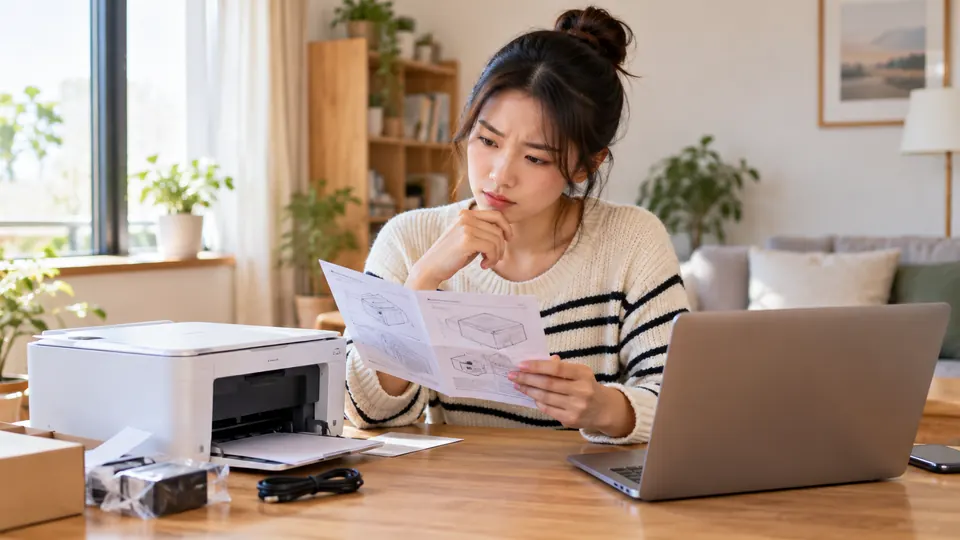
Find a way to do something, or understand it, by thinking.
I need to figure out how to use this printer.
Why recognition can be easier than speaking
When the expression is visible, its spelling is already a large clue. Speaking often starts with an intention. If every review goes from English to meaning, try the other direction: situation → English expression. This does not explain every difficulty: you might also need help with usage, word forms or the demands of speaking.
Keep a usable sentence, not only a definition
Figure out can mean finding an answer or understanding something after thinking. In the printer example, the useful pattern is figure out how to + an action. You can then write I need to figure out how to change my password. Keep the source sentence or the situation where you met the phrase; check new examples rather than assuming they are correct.
Recall before opening the answer
Scroll past the teaching card and try the blank below. A correct answer immediately after reading is one practice attempt, not proof of lasting memory. After another activity, or tomorrow, try recalling from the situation before seeing the card.
Recall from a situation
You do not know how to use the new printer.
Use the phrase to explain that you need to find a way to use it.
I need to __________ how to use the new printer.
Show the answer and usage
I need to figure out how to use the new printer.
Use the base form figure out after need to, rather than figured out.
Change a detail to use the phrase elsewhere
Keep the general meaning but replace the printer with a file that will not open. Try a sentence starting I need to… and using figure out. A possible answer is I need to figure out why this file won’t open. Here why introduces the cause you want to understand. Other natural sentences are possible.
Try a new context
This file will not open. You want to understand why.
Say your sentence before opening an example.
See one possible sentence
I need to figure out why this file won't open.
Turn saving into a small practice routine
Understand the sentence first. Keep its source or situation. Try recalling the expression before checking. Change one detail and check your new sentence. Return later and try again. In Gotcha, open figure out for meanings, examples and direct practice.
Tomorrow, start from a situation
Begin with an intention such as “I need to find a way to do this.” Say a sentence using the phrase you recall. If it does not come, check the example and try after a break. You are finding what needs practice, rather than judging yourself by the number of saved words.
Use subtitles to check missed words · Plan a return with spaced review
Collins — figure out · The Learning Scientists — Retrieval Practice